

Why Is Developmental Screening Important for Children
Executive Summary
Developmental screening provides a fast, structured snapshot of a child's growth, communication, and learning milestones without the wait of a lengthier diagnostic process. Catching subtle developmental variations early ensures immediate access to targeted early intervention during critical neuroplasticity years.
- Fast Results: Gives parents immediate clarity on whether a child is meeting typical milestones.
- Early Action: Identifies subtle developmental delays early to begin targeted support without delay.
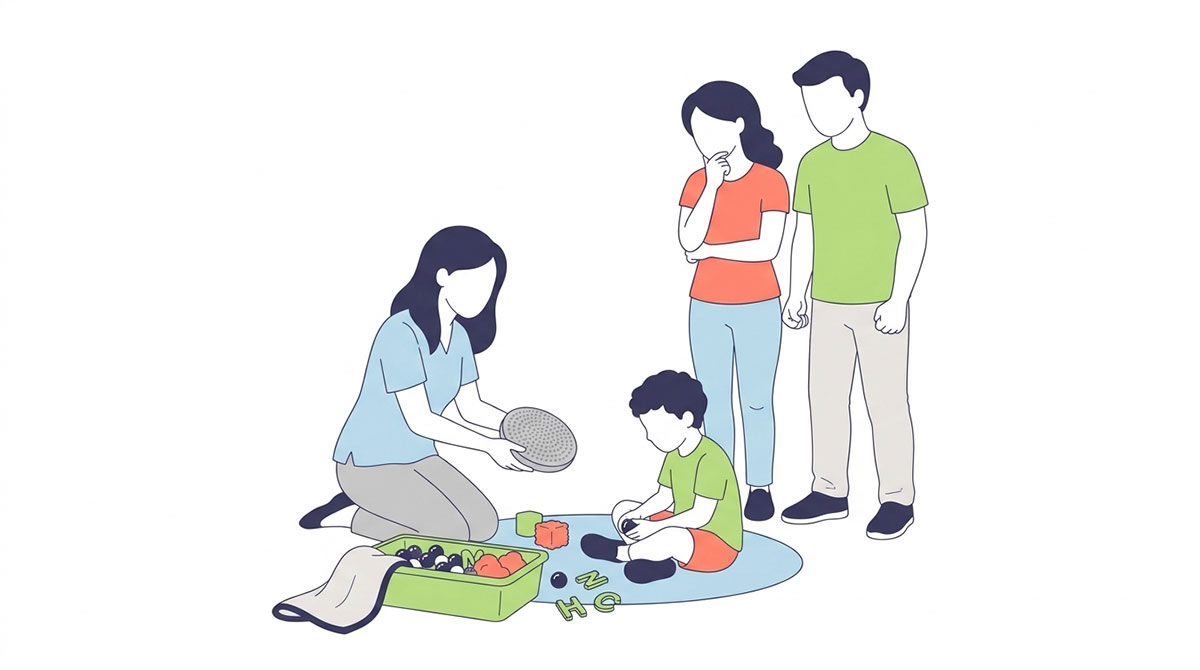
- Play-Based & Collaborative: Involves parents directly through play-based clinical observation and simple questionnaires.
In This Article:
- What Is Developmental Screening?
- Won’t My Child ‘Outgrow’ This?
- How Do I Recognize a Developmental Delay?
- Who Conducts the Screening and What Is Involved?
What Is Developmental Screening?
Developmental screening is a quick, structured assessment designed to evaluate how a child is growing, learning, and communicating compared to typical milestones. Rather than placing your family on a long waitlist for a full evaluation, screening offers immediate clarity regarding your child's current development. Catching subtle variations early allows targeted early intervention to begin right away, supporting your child when their brain is most adaptable.
Won’t My Child ‘Outgrow’ This?
Waiting for a child with autism or developmental delays to "outgrow" communication or regulation challenges often leads to lost developmental opportunities. Relying on time alone can heighten daily frustration for your child and lead to more significant social and behavioural struggles once formal schooling starts. Proactive screening replaces uncertainty with a clear pathway forward.
How Do I Recognize a Developmental Delay?
Recognizing when to seek a screening comes down to observing daily interactions and trusting your instincts as a parent.
- Key Indicators: You notice a quiet feeling that your child with autism is not talking as early as peers, avoids consistent eye contact, struggles with motor balance, or experiences frequent, intense meltdowns during routine transitions.
- Optimal Timing: Screenings are typically conducted as early as 12 to 18 months, or whenever a parent or pediatrician notices a gap in developmental milestones.
You do not need to wait for a formal school referral or a doctor's directive. The moment you ask yourself if a behaviour is typical is the ideal time to establish a baseline.
Screening Aspect | Details |
Typical Age Range | As early as 12 to 18 months, or at first concern |
Session Duration | Under 1 hour |
Format | Play-based observations & parent questionnaires |
Key Outcomes | Immediate baseline, home strategies, referral pathways |
Who Conducts the Developmental Screening and What Is Involved?
A developmental screening is conducted by compassionate, experienced clinicians, including Registered Psychologists, Board Certified Behaviour Analysts (BCBAs), or Speech-Language Pathologists (SLPs). These professionals specialize in understanding neurodevelopmental differences and identifying both strengths and areas needing support.
- Collaborative Process: The screening relies on play-based activities and brief parent discussions.
- Immediate Home Strategies: Clinicians provide practical, home-based guidance immediately so you can support your child the moment you leave.
- Empathetic Environment: At Monarch House, a screening is never a cold, single-page checklist; it is grounded in peer-reviewed science and built around our promise that you and your child belong.
Frequently Asked Questions
Is a developmental screening the same as a formal diagnosis?
No. A screening is a lightweight, preliminary tool used to identify whether a child is meeting typical milestones or if a more comprehensive, formal diagnostic assessment is recommended.
How long does a developmental screening session take?
Screening appointments are typically completed in under an hour through playful interactions and brief discussions with parents.
What happens right after the screening is finished?
Our team reviews the findings with you immediately, offering clear next steps, actionable home strategies, and direct referrals to specialized therapies if needed.
At Monarch House, we understand that every neurodivergent child's needs are unique and urgent. If your child is struggling with communication, routines, or behaviour, reach out to us today to discuss your specific concerns and explore personalized support options.
Additional Support
Why Are Autism Diagnostic Assessments Important for Children
An Autism Diagnostic Assessment is a comprehensive, gold-standard clinical evaluation that determines whether a child meets the criteria for ASD.
How to Manage Autism Funding Options in Ontario
Navigating Autism funding in Ontario requires understanding both provincial programs like AccessOAP and federal tax supports.
How to Make the Next Steps After an Autism Diagnosis Easier
Receiving an autism diagnosis is a major life event that requires prioritizing emotional health, family unity, and evidence-based action.