

How to Support Your Child’s Development with a BCBA
Executive Summary:
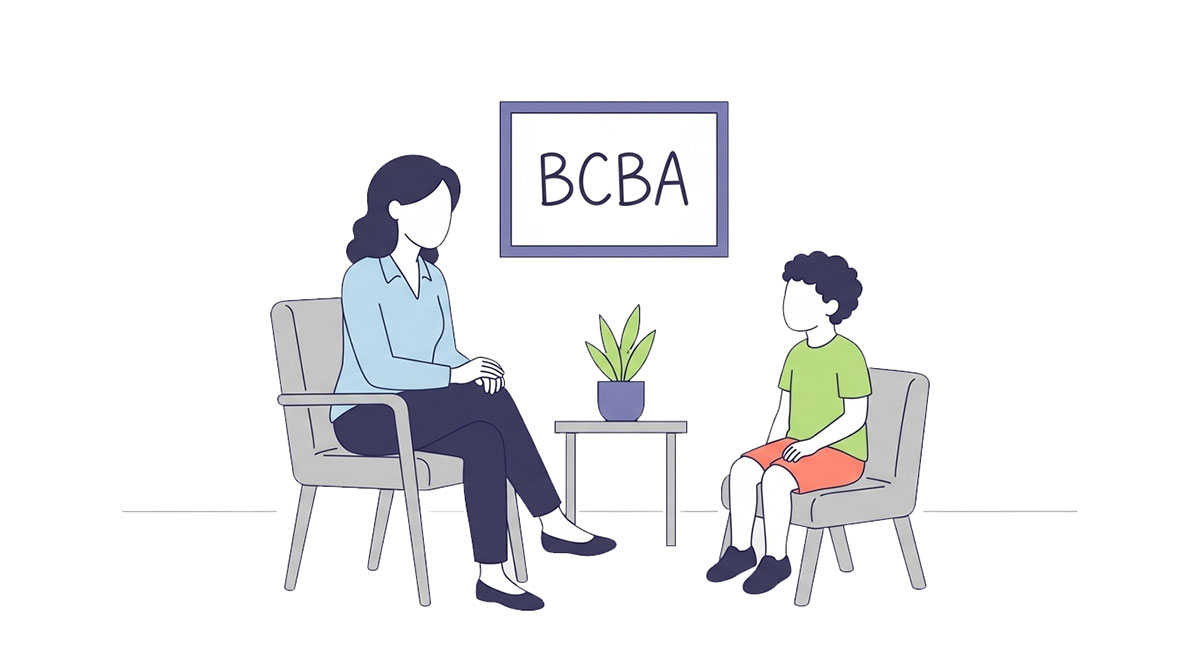
A Board Certified Behaviour Analyst (BCBA) is a master’s- or doctoral-level practitioner who specializes in understanding behaviour, including assessing the function or purpose a behaviour serves and how environmental factors influence it. BCBAs use this understanding to develop individualized, evidence-based strategies that build meaningful skills and improve quality of life. By designing individualized, play-based strategies, BCBAs help children with autism build communication skills, emotional regulation, and everyday independence.- Clinical Expertise: BCBAs hold advanced degrees, complete rigorous supervised fieldwork, and pass a national certification examination.
- Individualized Care: Programs focus on strengths, positive reinforcement, and play-based skill development while addressing distress-inducing behaviours.
- Family Support: BCBAs work directly with parents and interdisciplinary teams to ensure skills carry over into daily life.
In This Article:
- What is a BCBA?
- What does a Board Certified Behaviour Analyst actually do?
- Why is working with a BCBA important for your family?
- What outcomes do BCBAs aim to achieve?
- Professional Qualifications Comparison
- Why choose BCBAs at Monarch House?
What is a BCBA?
A Board Certified Behaviour Analyst (BCBA) is an advanced clinician who specializes in the science of behaviour analysis. Holding either a master’s or doctoral degree, a BCBA is trained to observe how environmental variables shape human learning and interaction, they also assess the function of behaviours. Rather than viewing developmental differences as deficits to be fixed, a BCBA studies the context around a behaviour to understand what a child is trying to communicate or accomplish. At its core, working with a BCBA ensures that your child’s therapy is grounded in validated, evidence-based practices tailored specifically to their unique profile.What does a Board Certified Behaviour Analyst actually do?
A BCBA evaluates, designs, and oversees individualized programs that build meaningful life skills, while seeking to understand the function of behaviours and supporting children with strategies that reduce distress, increase safety, and expand their opportunities and independence. Their day-to-day role involves assessing a child's unique needs, training therapy teams, and partnering directly with families.- Conducting Comprehensive Assessments: BCBAs perform functional behaviour assessments and clinical observations to pinpoint a child’s natural strengths, preferences, and growth areas.
- Designing Play-Based, Positive Programs: Programs are crafted around a child's organic interests, turning learning into an engaging, low-pressure experience.
- Coaching and Collaboration: BCBAs train therapy assistants, caregivers, and educators so that strategies remain consistent across home, school, and community environments.
Why is working with a BCBA important for your family?
Navigating neurodevelopmental care can often feel overwhelming, leaving parents uncertain about which strategies will truly support their child's growth. Working with a BCBA provides your family with a compassionate expert and structured, clinical guidance so you never have to navigate this path alone. By analyzing the root cause of challenging behaviours, a BCBA equips parents with practical, proactive tools to support their child with autism during everyday routines - such as bedtime, social gatherings, or community outings. Their expertise replaces guesswork with clear, compassionate, and neurodiversity-affirming strategies that uphold your child's dignity while empowering the entire family unit.What outcomes do BCBAs aim to achieve?
The ultimate objective of a BCBA is to enhance quality of life and foster meaningful independence for the child and their family. Success is measured not by forcing conformity, but by helping every child thrive as their authentic self. Key target outcomes include:- Functional Communication: Empowering a child to express their thoughts, wants, and boundaries through speech, picture exchange systems, or augmentative devices.
- Emotional Regulation: Teaching body-based self-regulation strategies to help children manage sensory overload or intense emotions safely.
- Daily Living & Social Skills: Developing practical independence in routines like dressing, hygiene, and peer interactions.
| Professional Level | Minimum Education | Primary Role & Responsibilities |
| BCBA / RBA | Master’s or Doctoral Degree | Conducts assessments, designs programs, supervises teams, trains caregivers. |
| BCaBA | Bachelor’s Degree | Assists in program implementation and assessment under direct BCBA supervision. |
| Therapist / Interventionist | Specialized Diploma or Training | Directly implements the daily play-based interventions designed by the BCBA. |
Frequently Asked Questions
What is the main difference between a BCBA and a therapy assistant?
A BCBA is a master’s-level clinician who assesses, designs, adjusts, and oversees the entire support plan, whereas therapy assistants or interventionists carry out the daily face-to-face sessions under the BCBA’s clinical supervision.
Is ABA therapy with a BCBA always clinic-based?
No. BCBAs design flexible intervention plans that can be implemented across clinics, homes, schools, and community settings to ensure skills translate naturally to real-world environments.
How do BCBAs incorporate positive reinforcement?
BCBAs build on each child’s interests, strengths, and individual motivations, using meaningful encouragement and reinforcement to support learning and engagement, chosen in collaboration with the child to make learning motivating and joyful rather than stressful.
How involved are parents in the process with a BCBA?
Parents are central partners. BCBAs work with parents to identify family priorities, capacity and strengths, and provide regular coaching and collaborative updates, so families feel confident using consistent, supportive strategies at home.
At Monarch House, we understand that every neurodivergent child's needs are unique and urgent. If your child is struggling with communication, routines, or behaviour, reach out to us today to discuss your specific concerns and explore personalized support options.
Additional Support
Why Are Occupational Therapists Important for Autistic Children
Occupational Therapists (OTs) are specialized healthcare professionals dedicated to helping children develop the foundational skills.
How to Choose an ABA Therapy Clinic in Canada
Selecting the right Canadian ABA therapy provider requires evaluating clinical credentials, family involvement, financial fit, and ethical practices.
How to Build Safe Play and Community Experiences in Autism
Schoolyards pose unique challenges for children with autism, but embracing diverse play styles and strong support networks transforms the experience.